

When Your AC Fails, Every Minute Counts
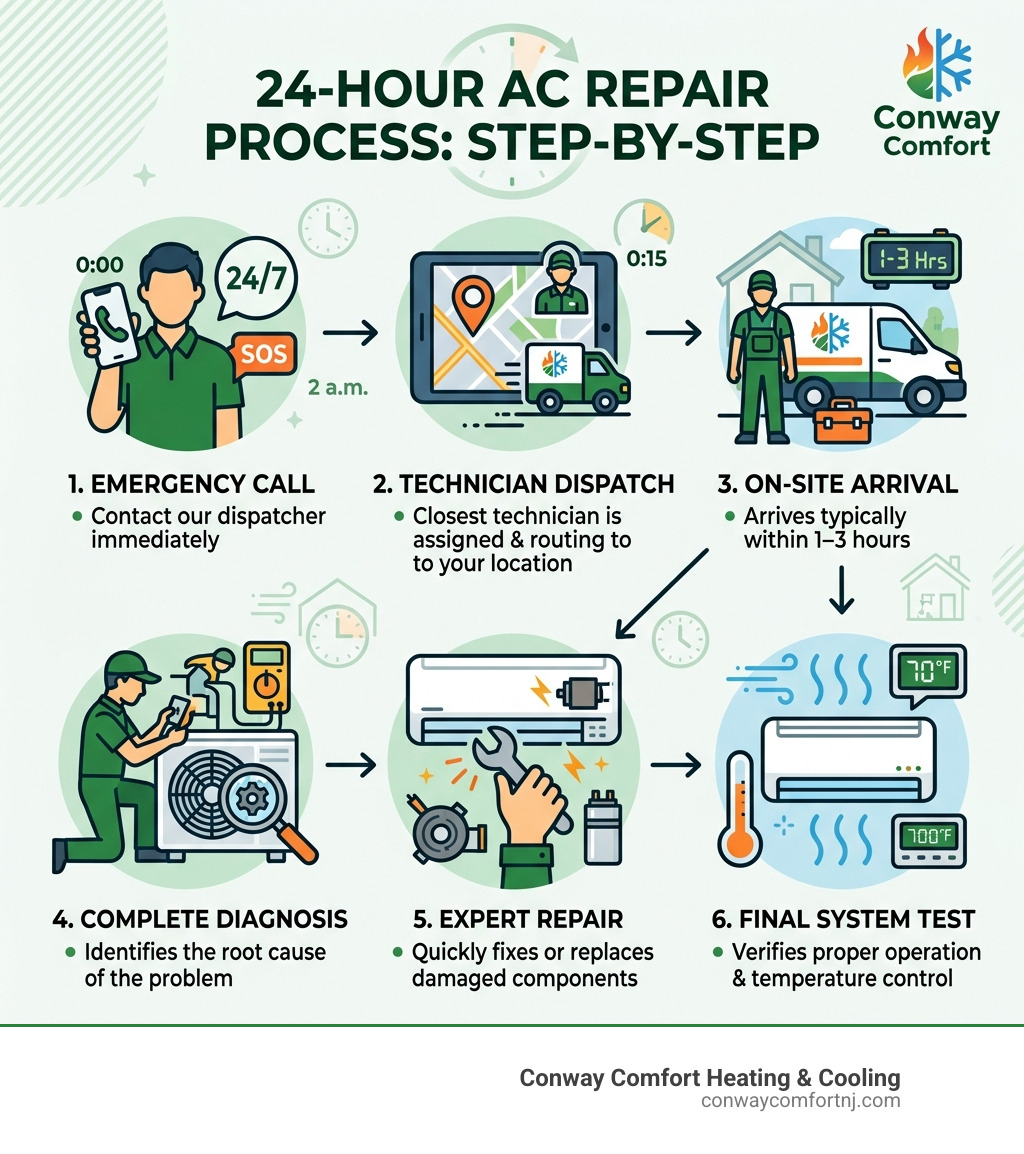
24-hour AC repair is exactly what it sounds like: professional HVAC service available any time of day or night, including weekends and holidays, so you’re never left sweating through a breakdown.
Here’s what you need to know right now:
| What you need | What to expect |
|---|---|
| Emergency AC repair, any time | Technicians available 24/7, 365 days a year |
| How fast they arrive | Typically within 1 to 3 hours of your call |
| What it costs after hours | Some companies charge the same rate 24/7 — always ask upfront |
| When to call immediately | Total failure, burning smells, water leaks, or extreme indoor heat |
| First step right now | Check your thermostat and circuit breaker, then call a pro if nothing changes |
Your AC doesn’t care that it’s 2 a.m. on a Sunday. It breaks when conditions push it hardest — usually during the hottest days of the year. And in New Jersey summers, that can go from uncomfortable to genuinely dangerous fast.
According to the CDC, dangerous heat begins when the heat index exceeds 90°F, and the risk of heat stroke rises sharply above 103°F. Even nighttime temperatures above 75°F can prevent your body from recovering properly. That’s not a minor inconvenience — it’s a health risk, especially for children, older adults, and anyone with a chronic condition.
I’m Brian Conway, owner of Conway Comfort Heating & Cooling, and since founding the company in 2011, I’ve seen how fast a failing AC can turn into a genuine emergency — which is exactly why I built our team around fast, reliable 24-hour AC repair for homeowners and businesses in Hamilton Township and beyond. Let’s walk you through everything you need to know to get your cool back safely and quickly.
Identifying a True Emergency for 24 Hour AC Repair
When the sun is beating down on Mercer County, and your vents start blowing lukewarm air, it’s easy to feel like the world is ending. But is it a “call at 3 a.m.” emergency or a “wait until Monday morning” inconvenience?
In our experience, a true emergency is defined by safety and health risks. High humidity and soaring temperatures in Central New Jersey aren’t just uncomfortable; they are taxing on the human body.
 735-572845-f15e42becd73?crop=entropy&cs=tinysrgb&fit=max&fm=jpg&ixid=M3w2MTMxNjF8MHwxfHNlYXJjaHwxfHxUaGVybW9tZXRlciUyMHNob3dpbmclMjBleHRyZW1lJTIwaGVhdCUyMGluZGV4JTIwYWJvdmV8ZW58MHwwfHx8MTc3NTAxNTUwN3ww&ixlib=rb-4.1.0&q=80&w=1080 "Thermometer showing extreme heat index above 90 degrees - 24 hour AC repair")
The Health Risks of Extreme Heat
Dangerous heat conditions typically begin when the heat index exceeds 90°F (32°C), according to the National Weather Service. At this level, the risk of heat exhaustion increases significantly. When that index climbs above 103°F (39°C), the risk of heat stroke—a life-threatening condition—becomes much higher.
Thousands of people are hospitalized each year due to heat-related illnesses. Vulnerable populations, including older adults, young children, and those with chronic medical conditions, are at the highest risk. If your home cannot maintain a safe temperature for these individuals, you are facing a legitimate emergency that requires 24 hour AC repair. Furthermore, nighttime temperatures staying above 75°F (24°C) are hazardous because they prevent the body from cooling down and recovering from the day’s heat.
When to Call for 24 Hour AC Repair
Beyond the thermometer, there are mechanical signs that you shouldn’t ignore. If you experience any of the following, do not wait:
- Total System Failure: If the unit won’t turn on at all during a heatwave, your indoor temperatures will skyrocket within hours.
- Electrical Smells or Burning Odors: A “fishy” or ozone-like smell often indicates melting wire insulation or a failing motor. This is a fire hazard.
- Smoke: If you see smoke coming from the indoor or outdoor unit, shut off the power at the breaker immediately and call us.
- Active Water Leaks: A clogged condensate line can cause water to back up, potentially damaging your ceilings, floors, and electrical system.
- Loud, Unusual Noises: High-pitched screaming, grinding, or loud banging suggests a major mechanical failure is imminent.
If you’re noticing these red flags, it’s time to seek professional AC Repair to protect your home and your health.
Warning Signs Your Cooling System is Failing
Rarely does an air conditioner simply “die” without a few parting words. Most systems give off warning signs before a total shutdown occurs. Recognizing these early can be the difference between a quick fix and an expensive midnight replacement.
Common Emergencies and Their Symptoms
One of the most visible signs of a problem is a frozen evaporator coil. You might see actual ice forming on the copper lines leading to your outdoor unit or on the indoor coil itself. This usually happens due to restricted airflow (like a filthy filter) or low refrigerant levels.
Another critical issue is refrigerant leaks. Refrigerant doesn’t “get used up” like gas in a car; it circulates in a closed loop. If it’s low, you have a leak. This causes the compressor to work harder, eventually leading to a total system burnout. You can learn more about the 3 Signs You Have a Refrigerant Leak to catch this early.
Recognizing Critical Issues Requiring 24 Hour AC Repair
Watch out for these specific behavioral changes in your system:
- Short Cycling: If your AC turns on and off every few minutes without cooling the house, it’s putting massive strain on the compressor.
- Warm Air: If the air coming out of the vents is room temperature or warmer, the cooling cycle has failed.
- High-Pitched Screaming or Hissing: Hissing often points to a refrigerant leak, while screaming usually indicates high internal pressure in the compressor—both are urgent.
- Unresponsive Thermostat: If you set the temperature to 70 and the display stays at 80 without the unit kicking on, there is a communication or power failure.
For a deeper dive into what to look for, check out our guide on Signs You Need AC Repair.
Immediate Steps to Take During a Heatwave Breakdown
Before you panic and call for 24-hour AC repair, there are a few “sanity checks” you can perform. Sometimes the fix is simpler than it seems, and checking these first can save you time and a service fee.
- Check the Thermostat: Ensure it is set to “Cool” and the temperature is lower than the current room temperature. If the screen is blank, it may just need new batteries.
- Verify the Circuit Breaker: Check your home’s main electrical panel. If the AC breaker has tripped to the “Off” or middle position, flip it back. However, if it trips again immediately, do not keep flipping it—call a professional, as this indicates a dangerous electrical short.
- Inspect the Air Filter: A completely clogged filter can cause the system to overheat and shut down. If it’s caked in dust, replace it immediately.
- Clear the Outdoor Unit: Ensure no tall grass, leaves, or debris are blocking the airflow around your outdoor condenser.
If these steps don’t restore cooling, it’s time to Get Your AC Emergency Diagnosed Today.
While you wait for the technician to arrive:
- Stay Hydrated: Drink plenty of water to help your body regulate its temperature.
- Close the Blinds: Block out the afternoon sun to prevent the “greenhouse effect” in your living room.
- Use Fans: Ceiling fans don’t lower the temperature, but the breeze helps sweat evaporate, making you feel cooler.
- Avoid Appliances: Don’t run the oven, stove, or dishwasher, as these add significant heat to your home.
Why DIY Repairs Pose Significant Risks
We live in the age of YouTube tutorials, but HVAC repair is one area where “doing it yourself” can be genuinely dangerous. Modern air conditioners are complex machines that involve high-voltage electricity and pressurized chemical refrigerants.
The Dangers of DIY
- Electrical Shock: Capacitors in an AC unit store a massive electrical charge even when the power is off. Touching the wrong part can lead to severe injury or death.
- Refrigerant Toxicity: Handling refrigerant requires EPA certification. It is a hazardous substance that can cause chemical burns and respiratory issues if mishandled.
- Mechanical Damage: Without the right tools, it’s easy to strip a bolt or damage a sensitive coil, turning a $200 repair into a $2,000 replacement.
- Warranty Voiding: Most manufacturers require professional maintenance and repair. If they see evidence of DIY work, they may refuse to honor your warranty on expensive parts like the compressor.
The Benefits of Professional 24-Hour AC Repair
When you call a professional team like ours, you aren’t just paying for a part; you’re paying for safety and expertise. We follow strict safety protocols and use specialized diagnostic tools to find the root cause of the problem, not just the symptom. This ensures a lasting repair that protects your equipment from long-term wear.
Understanding Common AC Problems You Can Avoid through professional care can save you thousands over the life of your system.
Evaluating Costs and Choosing a Reliable Technician
One of the biggest fears homeowners have with 24-hour AC repair is the “emergency surcharge.” You’re already stressed about the heat; the last thing you want is a surprise bill.
Understanding the Costs
Emergency repair costs can vary based on the time of day and the complexity of the issue. Some companies charge significant premiums for nights and weekends. At Conway Comfort, we believe in Transparent Pricing for HVAC Services, meaning you’ll know the cost before the work begins.
| Feature | Standard Repair | Emergency 24/7 Repair |
|---|---|---|
| Availability | Business Hours (9-5) | 24/7, Holidays & Weekends |
| Response Time | 24-48 Hours | 1-3 Hours |
| Technician Prep | Standard Tools | Fully Stocked “Mobile Warehouse” Trucks |
| Primary Goal | Routine Fix | Restoring Safety & Comfort ASAP |
How to Choose a Reliable Company
Don’t just call the first number you see on a search engine. Look for these markers of quality:
- Fully Stocked Trucks: A reliable company should arrive with the most common parts (capacitors, contactors, fan motors) on their truck to complete the repair in one visit.
- Certified Technicians: Ensure the technicians are licensed, bonded, insured, and ideally NATE-certified.
- Real People: In an emergency, you don’t want a voicemail. You want a live dispatcher who can give you an estimated arrival time.
- Repair vs. Replacement Advice: If your unit is over 10-12 years old and the repair cost is more than 50% of its value, a technician should honestly discuss replacement options with you rather than just taking your money for a temporary fix.
Preventing Future Breakdowns with Routine Maintenance
The best way to handle an emergency is to prevent it from happening in the first place. Most 24-hour AC repair calls we receive in Hamilton Township could have been avoided with a simple seasonal tune-up.
Why Maintenance Matters
Think of your AC like a car. You wouldn’t drive 50,000 miles without an oil change and expect the engine to last. Regular maintenance:
- Extends System Longevity: Keeping coils clean and motors lubricated reduces the strain that causes breakdowns.
- Improves Energy Efficiency: A well-tuned system uses less electricity to cool your home, lowering your monthly bills.
- Catches Small Issues Early: We often find frayed wires or weak capacitors during a routine check before they fail on a 95-degree day.
If you haven’t had your system checked this year, consider scheduling AC Repair in Hamilton, NJ to ensure your system is ready for the peak of summer.
Frequently Asked Questions about Emergency AC Repair
How quickly can a technician arrive for an emergency call?
While response times vary based on weather and call volume, most reliable 24-hour services aim to have a technician on-site within 1 to 3 hours. In places like Florida or during a Jersey heatwave, companies with larger fleets can often guarantee arrival within a very short window.
Are there extra fees for AC repairs on weekends or holidays?
Many companies do charge an “emergency diagnostic fee” or higher hourly rates for after-hours service. However, some providers offer flat-rate pricing regardless of the time. Always ask about the “trip charge” or “diagnostic fee” when you first make the call so there are no surprises.
What is the most common cause of a total AC breakdown?
The most frequent culprits are failed capacitors (which provide the “jump start” for your motors) and clogged condensate drains. Electrical issues like blown fuses or tripped breakers are also very common. Fortunately, these are usually quick fixes for a pro with a stocked truck.
Conclusion
Dealing with a broken air conditioner during a heatwave is stressful, but you don’t have to face it alone. Whether it’s a simple capacitor fix in Plainsboro or a complex compressor issue in Princeton, the key is to act fast to protect your home’s comfort and your family’s health.
At Conway Comfort Heating & Cooling, we’ve spent years serving the communities of Hamilton Township, East Windsor, and the surrounding Mercer County areas. We pride ourselves on our transparent pricing and our commitment to being there when you need us most. We treat your emergency like it’s our own, ensuring that you get a lasting repair from a technician who respects your home.
Don’t sit in the heat and hope for the best. Schedule Your Emergency Repair Now and let us help you keep your cool.
The post How to find reliable 24/7 HVAC repair without losing your cool appeared first on Conway Comfort Heating & Cooling.